Home Science Experiment Book

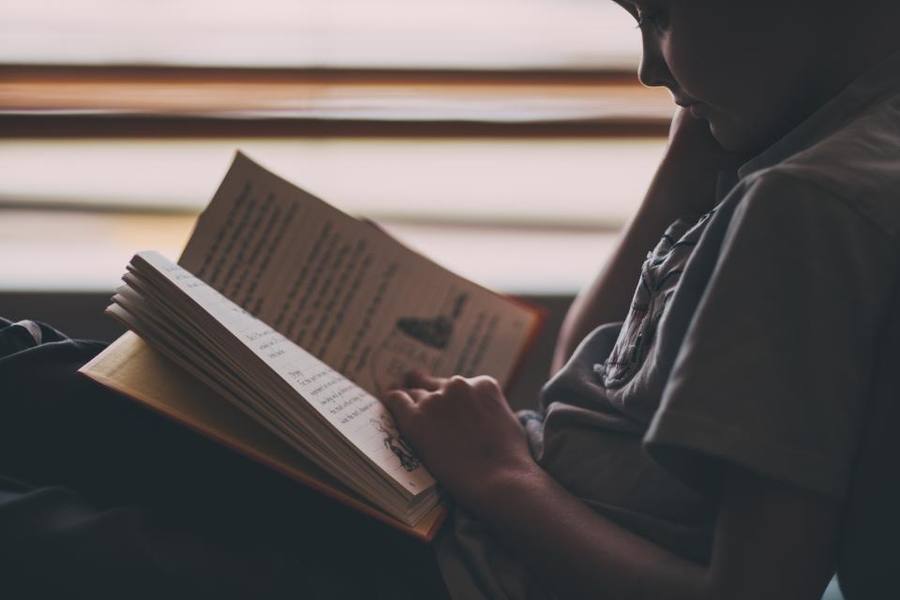
Symbolbild (Stockfoto); nicht das abgebildete Produkt.
Household Materials Mean It Happens
An experiment requiring a trip to a shop is an experiment that does not happen, and that gap is where most science activity books fail.
Books built around vinegar, bicarbonate of soda, food colouring, string, paper and torches can be done on the afternoon the book is opened.
That immediacy is worth more than any amount of sophistication, since the alternative is a book of things that would be interesting to do.
Prediction Is The Part That Matters
A demonstration that is watched teaches very little, and the learning is in predicting what will happen and then finding out whether the prediction held.
Asking a child what they think before starting, and asking why afterwards when they were wrong, is what converts an activity into science.
Books structured around that question, rather than as a list of impressive results, are meaningfully better and it is visible from a few pages.
Explanations Pitched Honestly
Some books explain results in terms that are simply wrong but memorable, which has to be unlearned later and is worse than no explanation.
A simplified but accurate explanation is achievable at any age, and it is a reasonable test of a book to check one explanation of something you know.
Saying "nobody fully knows" or "that is more complicated than this book can cover" is honest and children handle it better than adults expect.
Supervision, Heat And Sharp Things
Many experiments involve boiling water, candles, knives or bleach, and books vary considerably in how clearly they flag which of those need an adult.
A book without clear supervision markings is one to read through before handing to a child, since children work ahead of where an adult thinks they are.
Anything involving heat, flame, sharp blades or household chemicals should be an adult-led activity rather than a supervised one, which is a distinction worth making.
Repeatability And Consumables
The best experiments are ones that can be repeated with a variable changed, which is how the method is actually practised.
Activities consuming something scarce or expensive are performed once and become demonstrations again, which is less valuable.
Cheap repeatable experiments are worth considerably more than spectacular single ones, and a book weighted toward the former is the better purchase.
Recording results is the habit that separates a series of activities from a project, and a cheap notebook used for predictions, observations and drawings turns the book into something with continuity. Children return to earlier pages and notice their own earlier reasoning, which is a form of reflection that is difficult to produce any other way. It costs almost nothing and is the single addition that improves any science book.
Outdoor experiments extend what is possible considerably, since anything involving water, mess or scale is straightforward in a garden and impossible on a kitchen table.
Photographs of each stage make a record a child returns to, and a phone is sufficient for that without any additional equipment being needed.
The Verdict
A cheap and genuinely effective way to do science at home, where household materials and a prediction structure matter most.
Spectacular one-off activities teach less, some books explain results wrongly, and supervision flagging varies.
Ask what they think will happen before you start. Without that, it is a demonstration rather than science.
Auf einen Blick
Vorteile
- Household materials mean it actually gets done
- Prediction structure teaches genuine method
- Cheap and endlessly repeatable
- Works across a wide age range
Nachteile
- Some books give memorable but wrong explanations
- Supervision flagging varies in clarity
- Spectacular one-off activities teach less
- Some experiments need genuine adult control
Häufig gestellte Fragen
How do I pick a good one?
Household materials, so it can be done the afternoon it is opened, and a structure built on predicting before testing. Check one explanation of something you already know — some books give memorable but wrong explanations.
How do I make it educational?
Ask what they think will happen before starting, and ask why when the prediction was wrong. Without that it is a demonstration being watched, which teaches very little regardless of how impressive it looks.
What about safety?
Read the book through first, since children work ahead of where an adult thinks they are. Anything with heat, flame, blades or household chemicals should be adult-led rather than merely supervised.
Spezifikationen
| Type | Home science experiment book |
| Key quality | Ordinary household materials |
| Method | Predict, test, explain |
| Check | One explanation you already know |
| Honest answer | "Nobody fully knows" is acceptable |
| Adult led | Heat, flame, blades, chemicals |
| Best experiments | Cheap and repeatable with a variable changed |
| Read first | Children work ahead |
Fazit
Household materials and a prediction step are what matter. Read it through first — children work ahead.
Preis auf Amazon prüfen