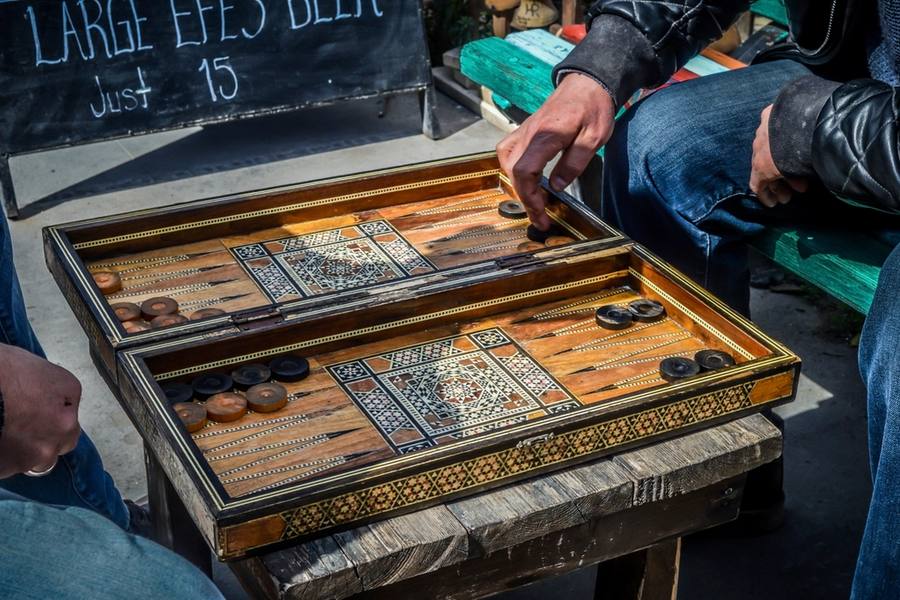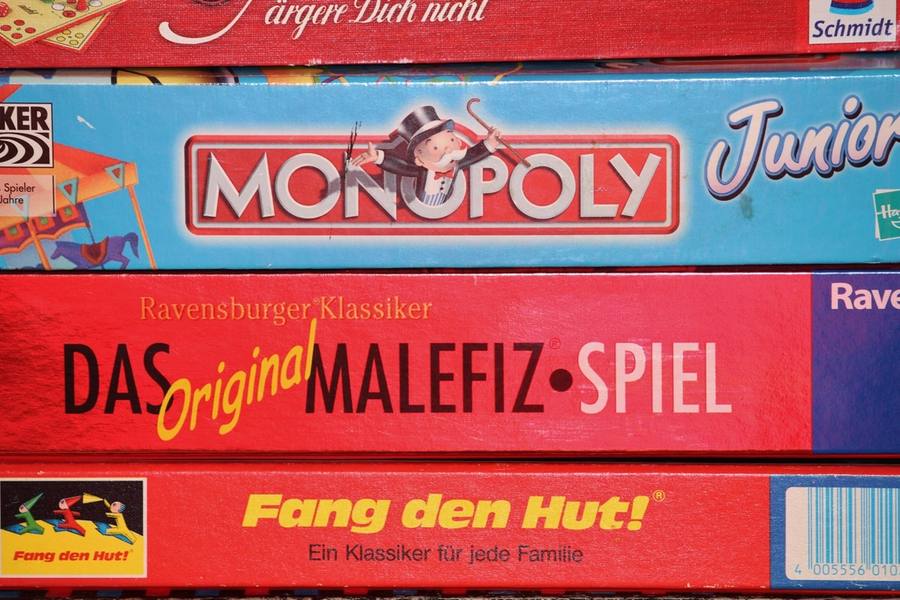
Image illustrative (photo de stock) ; ce n'est pas le produit exact.
Short Games Get Played Most
A fifteen-minute card game is played while dinner cooks, in a cafe, on a train and before bed, which across a year is hundreds of sessions.
An elaborate board game with a longer setup is played on occasions, which is perhaps a dozen times in the same year.
Cost per hour of play is therefore wildly in favour of the small game, and the small game is what family board gaming actually consists of for most households.
Portability Is The Whole Point
A card game in a small box travels in a bag with no thought, which means it is present when an unexpected wait happens.
That availability is what converts into plays, and a game at home in a cupboard during a two-hour delay is worth nothing.
Tin or hard-cased versions survive being carried where a cardboard box splits at the corners within months of a bag.
Rules Short Enough To Teach Anywhere
A game explainable in two minutes gets taught to grandparents, to a friend visiting, to a child's friend staying over, and each of those is a play that would not otherwise happen.
A game needing a fifteen-minute explanation is only played with people who already know it, which restricts it severely.
That teachability is a design property worth weighing, and it is why some very simple games remain in print for decades.
Randomness And Whether Adults Enjoy It
A card game determined entirely by the deal bores adults quickly, and one with too much calculation loses children.
The successful ones have a simple decision each turn whose consequence is visible, which keeps everybody genuinely playing.
A significant element of luck is actually helpful in a family game, since it lets a child beat an adult occasionally without the adult playing badly.
Card Quality And Wear
Cards played hundreds of times wear at the corners and become identifiable from the back, which quietly ruins any game with hidden information.
Linen-finish cards and plastic-coated stock last far longer, and card sleeves extend a favourite game almost indefinitely for a small cost.
Small hands bend cards, and a card holder is worth having for a young child who cannot fan a hand without showing everybody.
Expansions are worth approaching cautiously with a short game, since most add complexity and length and thereby remove the property that made the base game get played constantly. A game that took fifteen minutes and now takes thirty has moved into a different category of occasion. Adding an expansion after a hundred plays of the base game makes sense; adding one immediately generally does not.
Two-player capability is worth checking, since many family card games need three or more to work and a parent and one child is the commonest actual configuration on a weeknight.
Shuffling is genuinely difficult for small hands, and a game requiring frequent shuffling between rounds slows down considerably when a child is dealing.
The Verdict
The best value in family gaming because short portable games are the ones that actually get played.
Cards wear and become identifiable, thin boxes split in bags, and luck-only games bore adults quickly.
Sleeve a favourite. Worn corners become readable from the back and quietly ruin any hidden-information game.
En un coup d'œil
Avantages
- Played hundreds of times rather than a dozen
- Travels anywhere without thought
- Teachable in two minutes to anyone
- Luck lets children beat adults fairly
Inconvénients
- Cards wear and become identifiable from the back
- Cardboard boxes split in bags within months
- Pure-luck games bore adults quickly
- Small hands cannot fan a hand privately
Questions fréquemment posées
Why a card game over a board game?
Plays per year. A fifteen-minute card game gets played while dinner cooks, on a train and before bed — hundreds of sessions where an elaborate board game manages a dozen. That is where the value sits.
Does luck spoil it?
A significant luck element is actually helpful in a family game, since it lets a child beat an adult occasionally without the adult playing badly. Pure luck with no decisions is what bores adults.
How do I stop the cards wearing?
Sleeve them. Cards played hundreds of times wear at the corners and become identifiable from the back, which quietly ruins any game with hidden information. Sleeves cost little and extend a favourite almost indefinitely.
Spécifications
| Type | Quick family card game |
| Real value | Plays per year, not per session |
| Length | Around fifteen minutes |
| Portability | Small box, travels in any bag |
| Teachability | Explainable in two minutes |
| Balance | One visible decision per turn |
| Luck | Helpful; lets children win fairly |
| Longevity | Sleeves and linen-finish stock |
Résumé
Best value in family gaming by plays per year. Sleeve a favourite before the corners become readable.
Vérifier le prix sur Amazon